I am reading a book called The Five Invitations by Frank Ostaseski. One of the most valuable things I’ve read recently in this book is the idea that there are different kinds of hope.
There is a version of hope that he calls ordinary hope: blind faith that an external agency or authority will bring about what we desire. It is the “flipside of fear.” It is the kind of hope that is object-focused. This means that (1) we are hoping for a particular thing (“I hope I get to work on time today”) and (2) we are relying on something outside ourselves to deliver that thing to us. We have essentially abdicated our agency around getting the thing.
This is the context in which coaches will sometimes say, “hope is not a strategy.” (https://mclarencoaching.com/hope-city-arkansas/). This reflects a tenet that most coaches hold – if you want something, hope alone is not likely to get it for you.
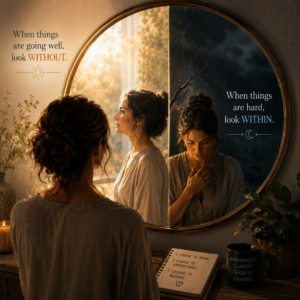
Ostaseski distinguishes this from mature hope. While ordinary hope is more an expression of fear and perceived powerlessness, mature hope is an innate human quality that can positively contribute to a sense of wellness. This is something I personally relate to trust. When there are things that are either partially or entirely out of my control, I can trust that I will discover the value in the current situation. I can trust I will find answers. I can trust something good or needed will arise. This is hope to me.
Ordinary hope focuses on the external circumstances while mature hope takes us inside ourselves and helps us find the agency that we actually do have. Mature hope may want a particular outcome, but it is not dependent upon getting the outcome. When we let go of attachment to a particular outcome, we can see things that we did not see before. And often we can discover an agency we had previously given away.
When there is a thing that we want in life, ordinary hope is the desire that we will get it, magically and without taking action, and often because we cannot see what (or have told ourselves there is no) action to take. Mature hope is discovering the value in living fully given our current conditions. Mature hope acknowledges that we never know what is going to happen next. Thus “the energizing quality of mature hope helps us to remain open to the possibility that while life may not turn out the way we first thought, opportunities we never imagined also arise.”
Another coach I know said this:
“My husband and I wanted to do a strenuous hike in our mid-80s. From the ordinary hope perspective we could have said, “I hope we can do this, despite our ages (fear) because we are healthy and have had years of hiking history.” More useful was our mature hope which had us choose to take a year to train – finding the value in practicing, learning answers to questions as they arose, and experiencing an elevated level of fitness with appreciation for what we could do. Rather than focus on our hope that we weren’t too old, we found opportunities we never imagined which led to us successfully completing the hike.”
Ordinary hope would have led to them abdicating their power – I hope I can do this hike – whereas mature hope enabled them to see possibility and take action, knowing they may or may not get the specific desired result and still working toward it.